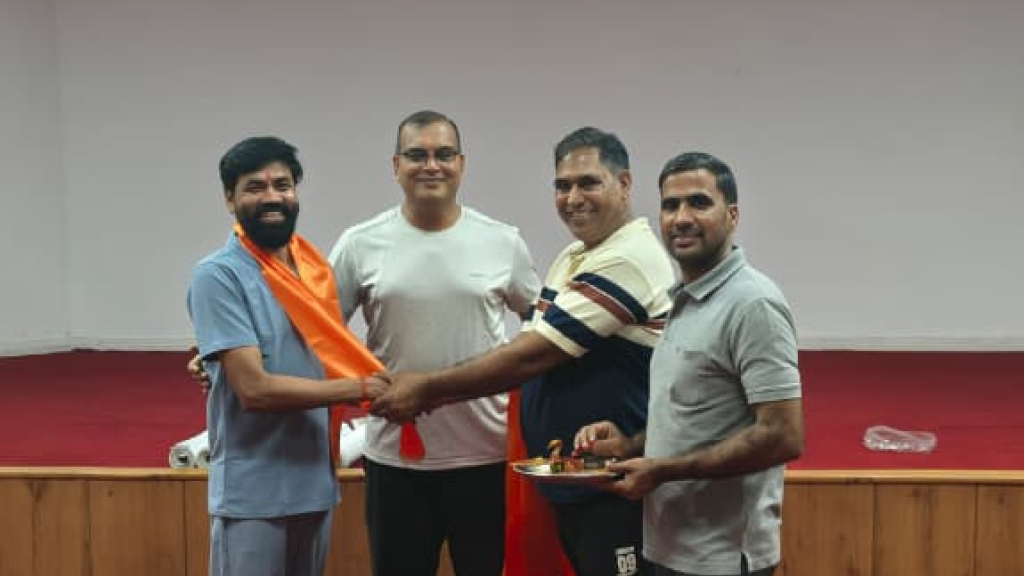
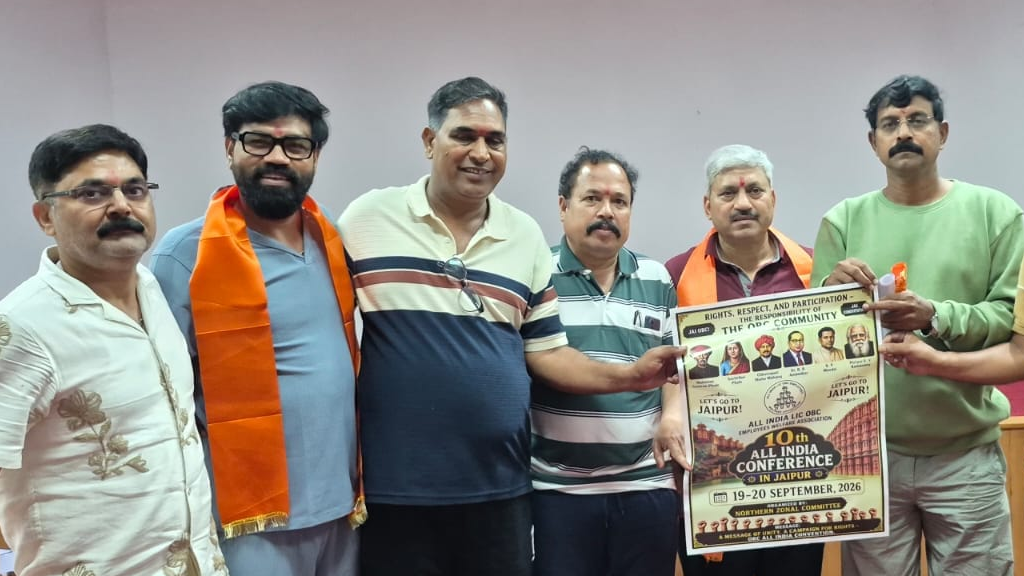
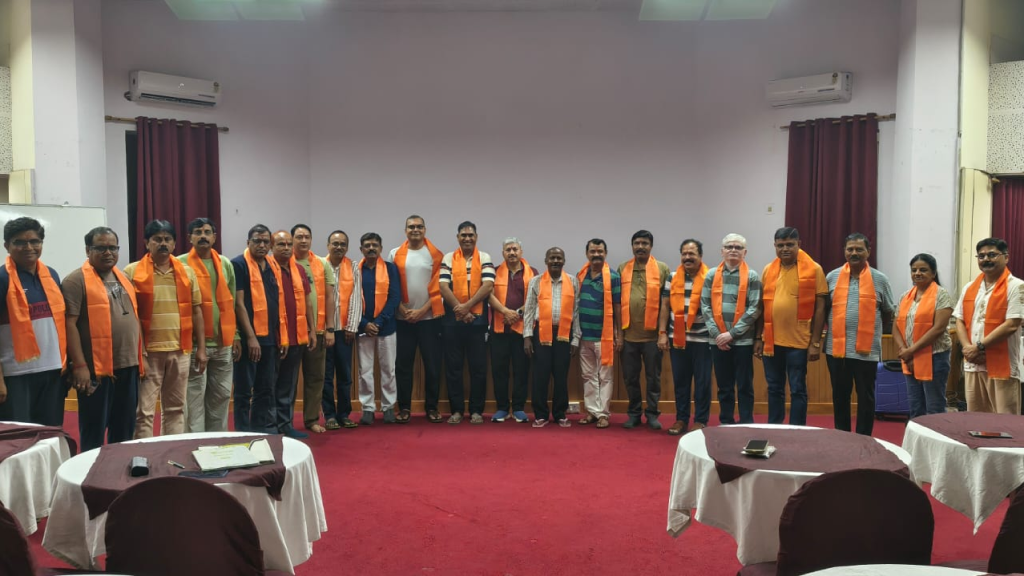
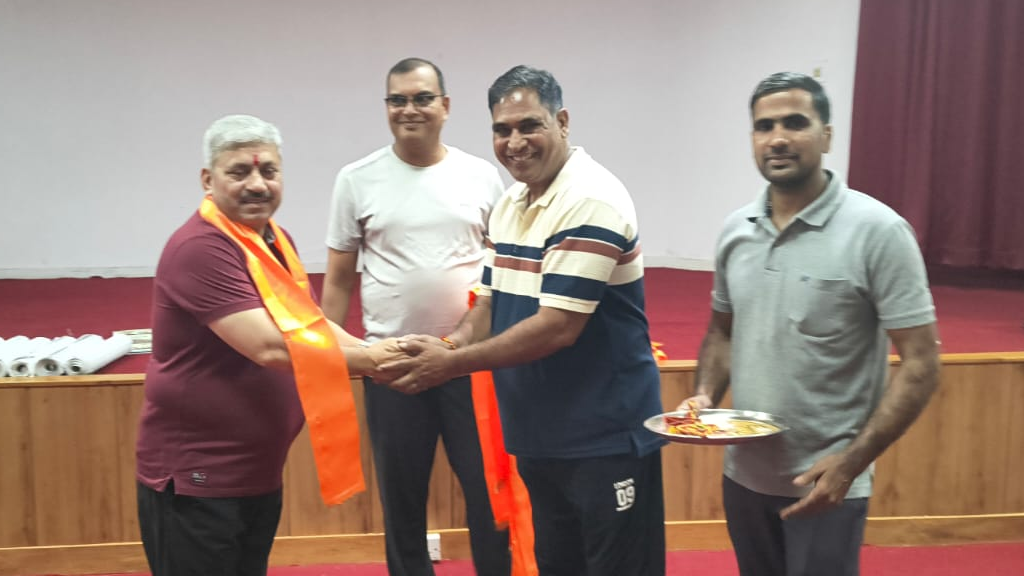
Training Programme on OBC Reservation Matters – Gurugram
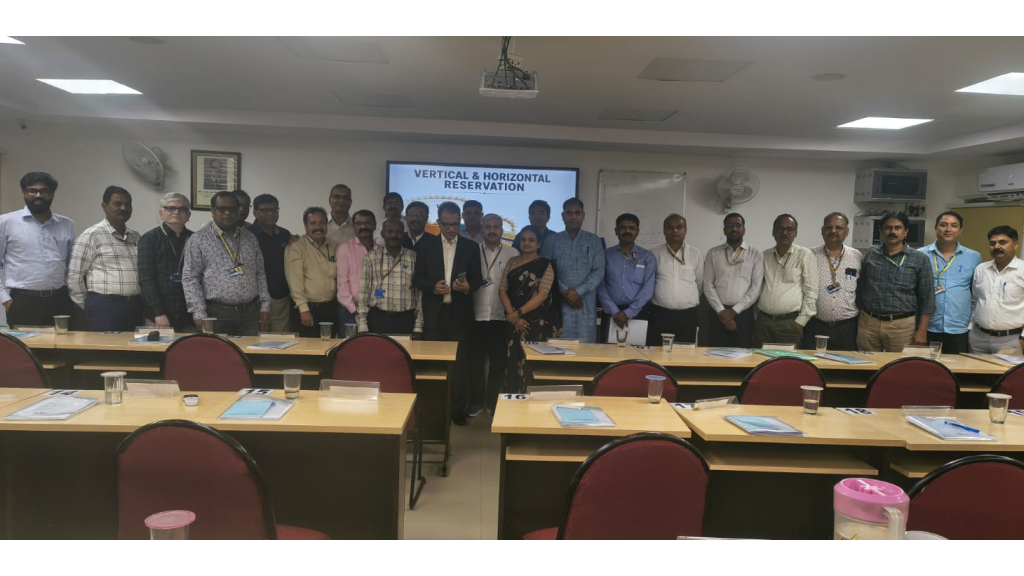
Venue: Zonal Training Centre (ZTC), Gurugram)
Session No: CR-78
Date: 17th & 18th August 2026
Subject: Reservation Matters relating to OBC Employees
1. Introduction
A two-day training programme on “Reservation Matters for Representatives of Welfare of OBC Employees” was conducted at Zonal Training Centre, Gurugram, on 17th and 18th August 2026.
The programme was specifically designed to enhance the knowledge and understanding of representatives dealing with reservation matters, particularly with regard to OBC reservation, creamy layer provisions, reservation in promotions, maintenance of reservation rosters, backlog and shortfall vacancies, horizontal reservation, de-reservation and verification of caste certificates.
The training was highly informative and practical in nature. It provided an opportunity to understand the applicable Government instructions and their implementation within LIC.
2. Major Subjects Covered
A. Background and Latest Instructions on Reservation
The programme began with an overview of the background and evolution of the reservation policy in Government and Public Sector Organisations.
The session covered:
Constitutional provisions relating to reservation.
Reservation for OBC employees.
Applicable Government instructions and policy guidelines.
Recent developments and latest instructions relating to reservation.
Important provisions concerning OBC Non-Creamy Layer (NCL) status.
Importance of proper implementation of reservation policy in recruitment and promotion.
The session helped us understand that reservation is not merely a concession but an important constitutional and administrative mechanism intended to ensure adequate representation of disadvantaged communities.
B. Quantum of Reservation in Promotion
A detailed session was conducted on the quantum of reservation in Direct Recruitment (DR) and Promotion.
We learned about:
Scope and applicability of reservation.
Reservation percentages applicable to different categories.
Reservation in promotion.
Conditions governing applicability of reservation.
Concept of relaxation and concessions available to reserved category employees.
The distinction between reservation, relaxation and concessions.
The session emphasised that every reserved-category employee should be aware of the provisions applicable to them so that legitimate benefits are neither denied nor incorrectly applied.
C. Maintenance of Reservation Registers and Rosters
One of the most important sessions dealt with the operation and maintenance of reservation registers for a large cadre and preparation of reservation rosters.
We learned:
The purpose and importance of reservation registers.
How roster points are operated.
How vacancies are identified against roster points.
The importance of maintaining accurate and updated reservation records.
How roster registers help ensure transparency in recruitment and promotion.
The importance of verifying the roster before finalising promotion or recruitment.
It was understood that proper maintenance of rosters is essential for ensuring that the prescribed reservation is actually implemented.
D. Shortfall, Excess and Backlog Reserved Vacancies
The training also explained the concepts of:
Shortfall – Excess – Backlog – Squeezing of Reserved Vacancies
We learned how to identify:
Shortfall in reserved representation.
Excess representation.
Backlog vacancies.
The circumstances in which reserved vacancies may remain unfilled.
The importance of carrying forward eligible backlog vacancies.
The effect of cadre strength and roster operation on reserved vacancies.
This session was particularly useful for representatives because identifying shortfall and backlog is essential for safeguarding the interests of OBC employees.
3. Application of Reservation Rosters in Direct Recruitment and Promotion
A detailed practical session was conducted on the application of reservation rosters in Direct Recruitment and Promotion, including the concept of own merit.
We learned that reserved-category candidates who qualify on their own merit, without availing reservation-related relaxations or concessions as applicable under the rules, may have different treatment in the roster depending on the governing instructions.
The practical exercises helped us understand how roster points are applied in actual recruitment and promotion situations.
4. Horizontal Reservation
The session on Horizontal Reservation was another important area of learning.
We understood:
The meaning of horizontal reservation.
The difference between vertical and horizontal reservation.
How horizontal reservation operates across different social categories.
The concept of adjustment of candidates under horizontal reservation.
The concept of grouping of posts and its relationship with reservation.
This knowledge is important because horizontal reservation has to be applied differently from vertical reservation, and incorrect application can affect the rights of eligible employees.
5. De-reservation of Reserved Posts
The training also covered the concept of de-reservation of reserved posts.
We learned that reserved posts cannot ordinarily be treated as unreserved merely because a suitable candidate is not immediately available. De-reservation is subject to prescribed rules, procedures and competent authority approval.
The session highlighted the need for representatives to carefully examine any proposal relating to de-reservation and ensure compliance with the applicable instructions.
6. Verification of OBC and Other Caste Certificates
A separate session was devoted to verification of caste certificates, feedback and validation.
We learned the importance of:
Proper verification of caste certificates.
Checking the authenticity and validity of certificates.
Ensuring that OBC candidates satisfy the applicable Non-Creamy Layer requirements wherever required.
Proper communication with the competent issuing authorities.
Avoiding arbitrary rejection of valid certificates.
Maintaining proper documentation and records.
The session reinforced that representatives should understand the distinction between the caste/community status and the eligibility conditions relating to OBC Non-Creamy Layer.
7. Understanding OBC Creamy Layer
A particularly important learning area for OBC representatives was the proper understanding of OBC Creamy Layer provisions.
The training helped us appreciate that determination of OBC-NCL status has to be made strictly in accordance with the applicable Government instructions and prescribed criteria.
It is therefore important that:
The prescribed certificate format is properly used.
Relevant service and appointment details are correctly recorded.
The applicable income and other conditions are examined as per Government instructions.
Salary income should not be mechanically treated as the sole criterion where the applicable rules provide otherwise.
The status and category of the employee, including the relevant service conditions, must be considered wherever prescribed.
This subject is especially relevant to representatives because many grievances arise due to incorrect interpretation or application of creamy layer provisions.
8. Practical Importance of the Training for OBC Representatives
The training has significantly improved our ability to represent the genuine concerns of OBC employees.
As representatives, we have understood the importance of:
Studying the latest Government and LIC instructions on reservation.
Examining reservation rosters carefully.
Identifying shortfall and backlog of OBC vacancies.
Checking whether reservation has been correctly implemented in promotions.
Understanding the concept of own merit.
Distinguishing vertical and horizontal reservation.
Examining cases involving de-reservation.
Properly verifying OBC certificates and NCL status.
Maintaining documentary evidence while raising grievances.
Representing employees based on rules and facts rather than assumptions.
9. Overall Learning
The two-day programme has provided us with a much clearer understanding of the legal, constitutional, administrative and practical aspects of reservation policy.
The most important takeaway is that an association representative should not merely raise grievances but should be capable of examining the reservation roster, identifying the specific violation or shortfall, referring to the applicable rule and presenting the matter before the appropriate authority with proper evidence.
The training has therefore strengthened our capacity to work more effectively for the welfare and legitimate rights of OBC employees.
10. Conclusion
The training programme at ZTC, Gurugram, was highly useful and relevant for representatives of the OBC Employees Welfare Association.
It has enhanced our understanding of reservation in recruitment and promotion, roster management, backlog and shortfall vacancies, own merit, horizontal reservation, de-reservation, caste certificate verification and OBC creamy layer provisions.
We sincerely appreciate the efforts of the Zonal Training Centre and the faculty members in providing such a valuable learning opportunity.
We will endeavour to utilise the knowledge gained from this programme for the effective implementation of reservation policy, protection of the legitimate rights of OBC employees, and constructive engagement with the LIC administration.